-
 English
-
 Español
-
 Português
-
 Русский
-
 Français
-
 日本語
日本語
-
 Deutsch
-
 Tiếng Việt
-
 Italiano
-
 Nederlands
-
 ไทย
ไทย
-
 Polski
-
 한국어
한국어
-
 Svenska
-
 Magyar
-
 Bahasa Melayu
-
 বাংলা
বাংলা
-
 Dansk
Dansk
-
 Suomi
Suomi
-
 हिन्दी
-
 Filipino
-
 Türkçe
-
 Gaeilge
-
 العربية
-
 Bahasa Indonesia
-
 Norsk
Norsk
-
 اردو
اردو
-
 Čeština
-
 Ελληνικά
-
 Українська
-
 Basa Jawa
-
 فارسی
فارسی
-
 தமிழ்
தமிழ்
-
 తెలుగు
-
 नेपाली
-
 မြန်မာ
-
 Български
-
 ລາວ
ລາວ
-
 Latina
-
 Қазақша
-
 Euskera
-
 Azərbaycan
-
 Slovenčina
-
 Македонски
-
 Lietuvių
-
 Eesti
Eesti
-
 Română
-
 Slovenščina


Farm ATV Utility Vehicles Electric 4x4 Quad for Agriculture Use
2026/07/13
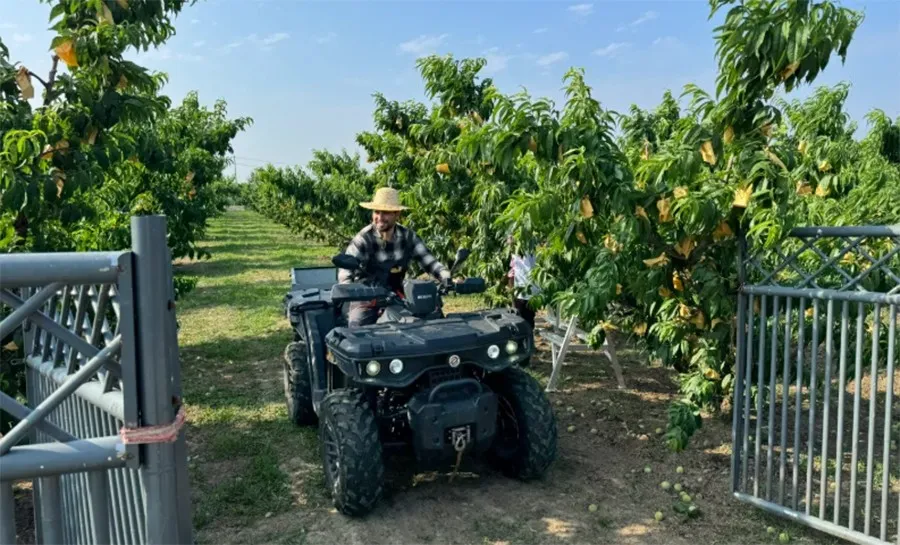
The evolution of agricultural mobility has placed increasing emphasis on efficiency, terrain adaptability, and operational independence. Within this context, farm ATV utility vehicles have become an essential category of equipment for land management and field operations. Their ability to navigate uneven terrain while supporting transport and workload tasks makes them a practical alternative to conventional small tractors or light transport machines.
Unlike traditional fuel-based transport equipment, electric platforms introduce a quieter and more controlled movement experience across farmland. This shift is particularly important in environments where livestock behavior, soil preservation, and operational timing all influence productivity. BSTABO focuses on developing electric mobility systems that align with these requirements while maintaining durability and structural strength under continuous agricultural use.
Farm ATV Utility Vehicles Electric System Architecture and Energy Logic
The foundation of an electric 4x4 quad for agriculture use lies in its integrated power and control system. Instead of relying on mechanical combustion cycles, energy is distributed through battery modules and motor controllers that regulate torque output in real time. This allows smoother acceleration and more precise handling across varying soil densities.
Battery configuration is designed to support extended operational cycles without abrupt performance drop. Energy management logic prioritizes stability over short bursts of output, ensuring consistent traction even when the terrain shifts between dry soil, mud, or gravel paths. This approach reduces unnecessary energy loss and improves overall field efficiency.
A key advantage of this structure is the reduction of mechanical complexity. With fewer moving components compared to traditional machines, maintenance requirements are simplified, and operational reliability becomes more predictable over long-term agricultural use.
Structural Engineering of Farm ATV Utility Vehicles Performance
The physical structure of farm ATV utility vehicles is engineered to balance load endurance and terrain responsiveness. The chassis is reinforced to handle variable weight distribution, especially when transporting farming materials or equipment across uneven land surfaces. At the same time, weight optimization ensures that maneuverability is not compromised.
Suspension systems play a critical role in maintaining ground contact stability. Instead of rigid motion, the system absorbs terrain impact and redistributes force across all wheels. This enhances control in environments where soil irregularities or slopes are frequent.